WHAT I DO
I teach people how to use creativity and imagination for self-exploration and connection. Through workshops, 1:1 sessions, and collaborations, I use expressive arts as an integrated, non-clinical approach to help individuals cultivate their own creative practice, and to support the vital work that happens in organizations and communities.
THE PRACTICE
About Expressive Arts
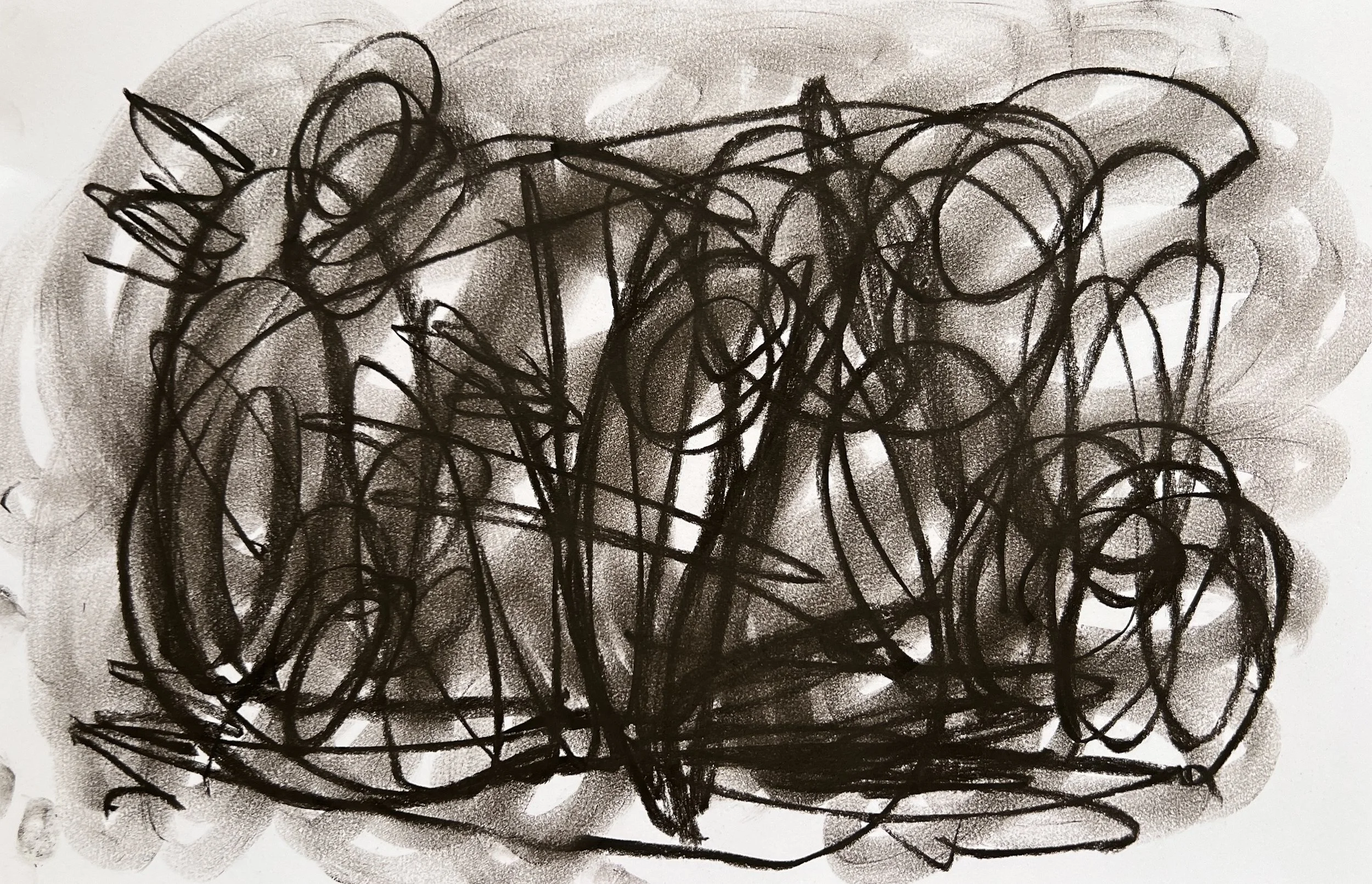
Expressive arts is a process-oriented sense making practice that uses visual arts, reflective writing, movement, sound, music, and theater to hold what can’t always be said outright. We tell our stories, document our lives, and transmit our dreams and aspirations using art because some things can only be known through making.
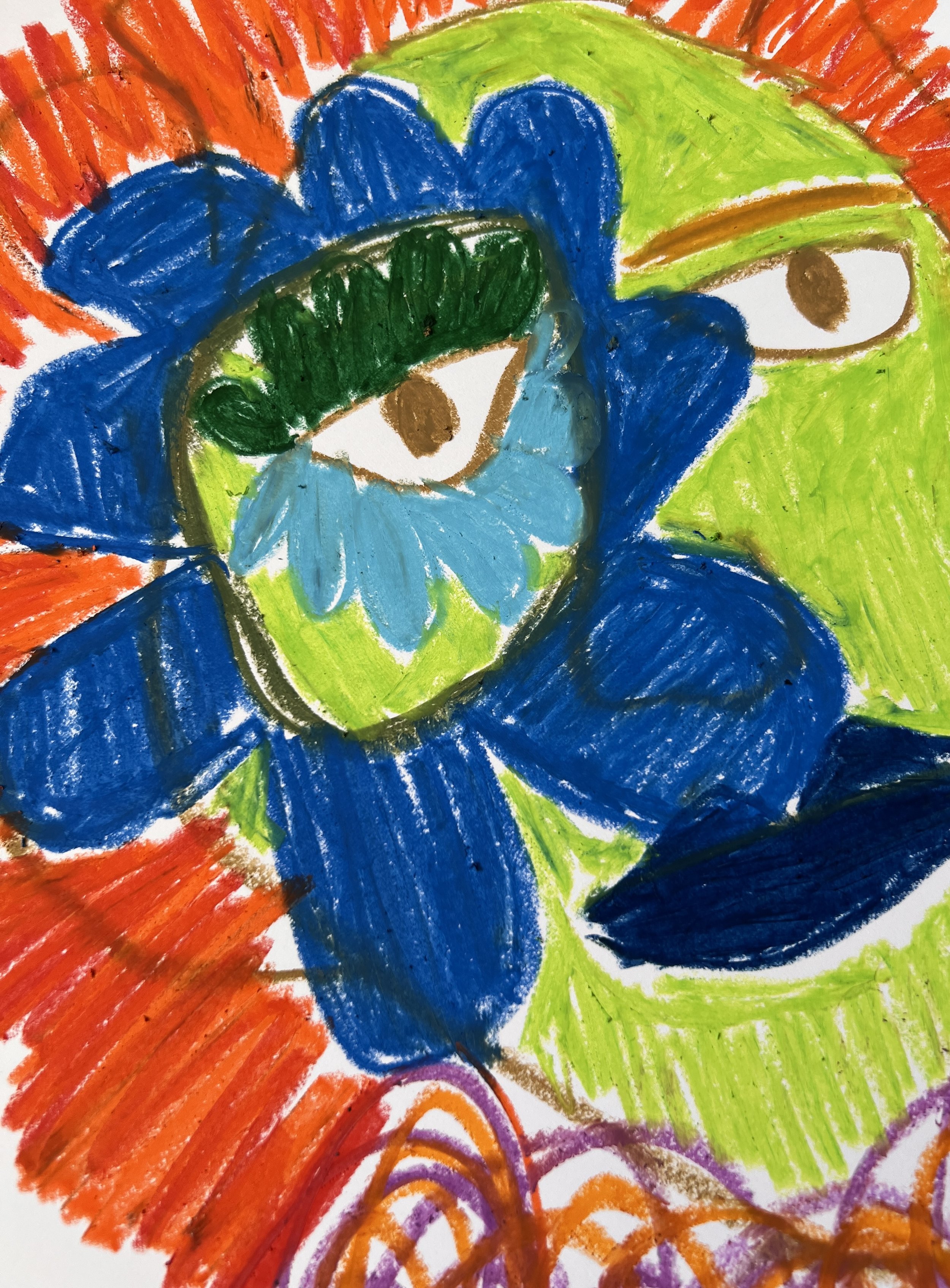
This practice focuses on process rather than technique or skill-building. We make marks and choices intuitively without worrying about what it “should” look like. We allow ourselves room to experiment, release ourselves from impossible standards, and let go of judgment. The process is where we meet ourselves and each other anew.
Expressive arts deliberately combines different arts modalities within a session or workshop because the multi-sensory experience externalizes what our bodies carry. This approach gives us insight into our lived experiences, gives form to our memories and emotions, and makes room for new possibilities.
How I use expressive arts
MY APPROACH
I believe that methods are tools that we can use to make our lives better. Long before I learned about expressive arts, I was using journaling, drawing, writing, dance, and other forms in my personal life, and in my teaching and facilitation. Early on in my teaching career, I learned that making a subject or issue come to life through unscripted performance, group poetry, or other technique, provided an opening that lecturing alone could not achieve. Expressive arts gave me a framework for how to bring these different modalities together.
My approach to expressive arts is non-clinical because I am not a therapist or clinician and cannot diagnose or make mental health assessments. I believe that art making is a way of knowing that should be accessible to everyone, and while it can be extremely beneficial within a therapeutic relationship, creativity is important outside of that context.
I work within the overlapping fields of non-clinical expressive arts, process-oriented arts, and social practice arts. While they each have their own distinct principles, they share a core belief that the making matters more than what gets made. It is in the process, the choices, the mess, the shifts that happen along the way where we find meaning. The process is the art. I make art with others and facilitate collaborative sessions because the same practice that helps one person reach what words can’t can help a group build shared understanding and the collective capacity to act. I believe that what we build together, we can also change together.
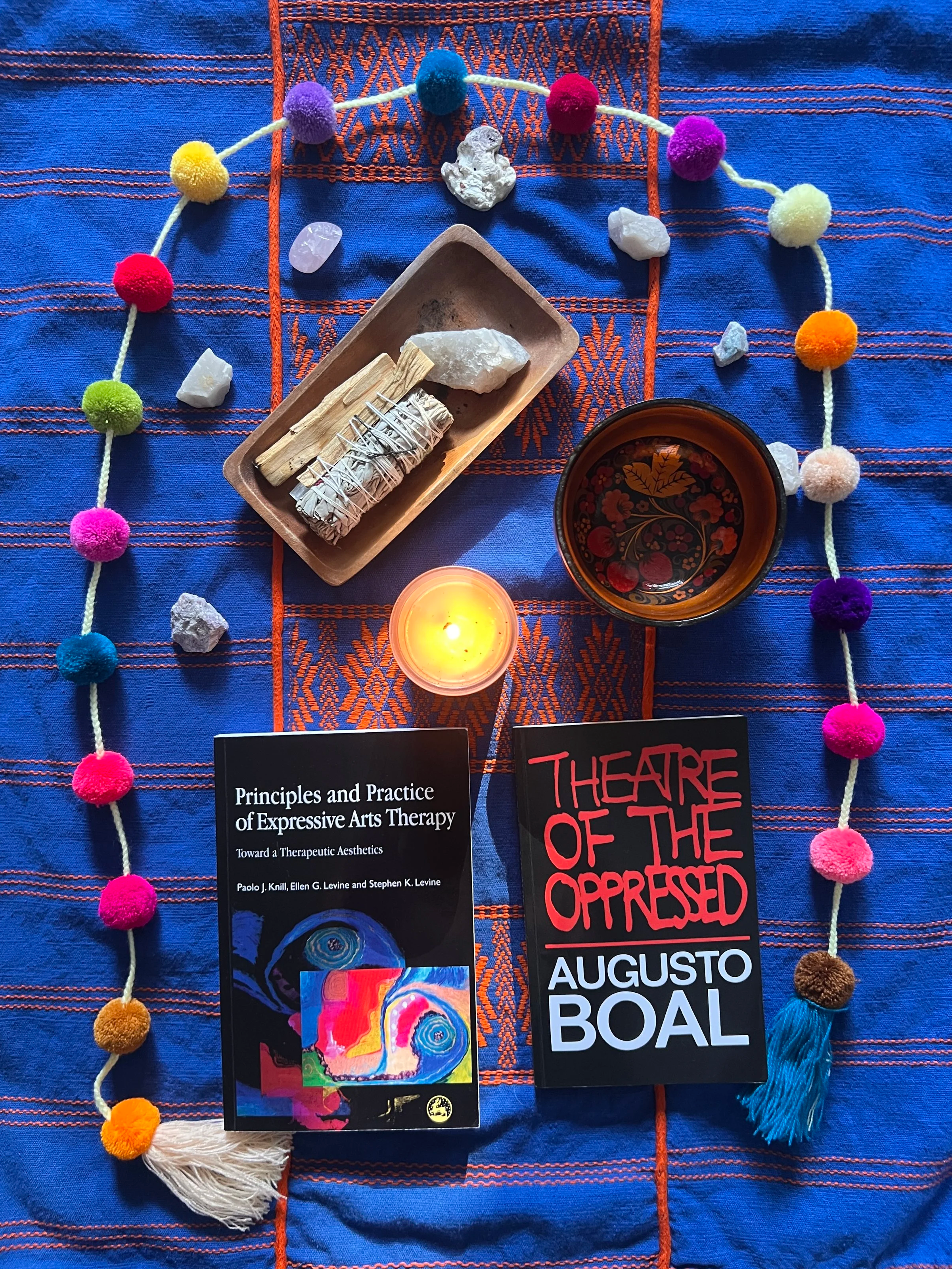
My work is rooted in a lineage of writers, thinkers, and educators who viewed education as a practice of freedom, insisted that awareness without action is pointless, and that a creative practice can serve as rehearsal for the things that we want to build in real life.
This approach refuses to treat people or communities as problems to be fixed. It trusts that individuals and communities hold knowledge, and know best what they want and need. A creative practice gives them tools to deepen their analysis and build on what already exists. Expressive arts extends that practice into something concrete. It gives us ways to practice new forms of relating to each other, and reimagine the challenges we face.
WHO IT’S FOR
Organizations and Communities
My work happens at the level of organizations and communities, and is co-created with others. If you’re a community organization, advocacy group, nonprofit or NGO working to create lasting change, I’d love to be in conversation.
Individuals and Small Groups
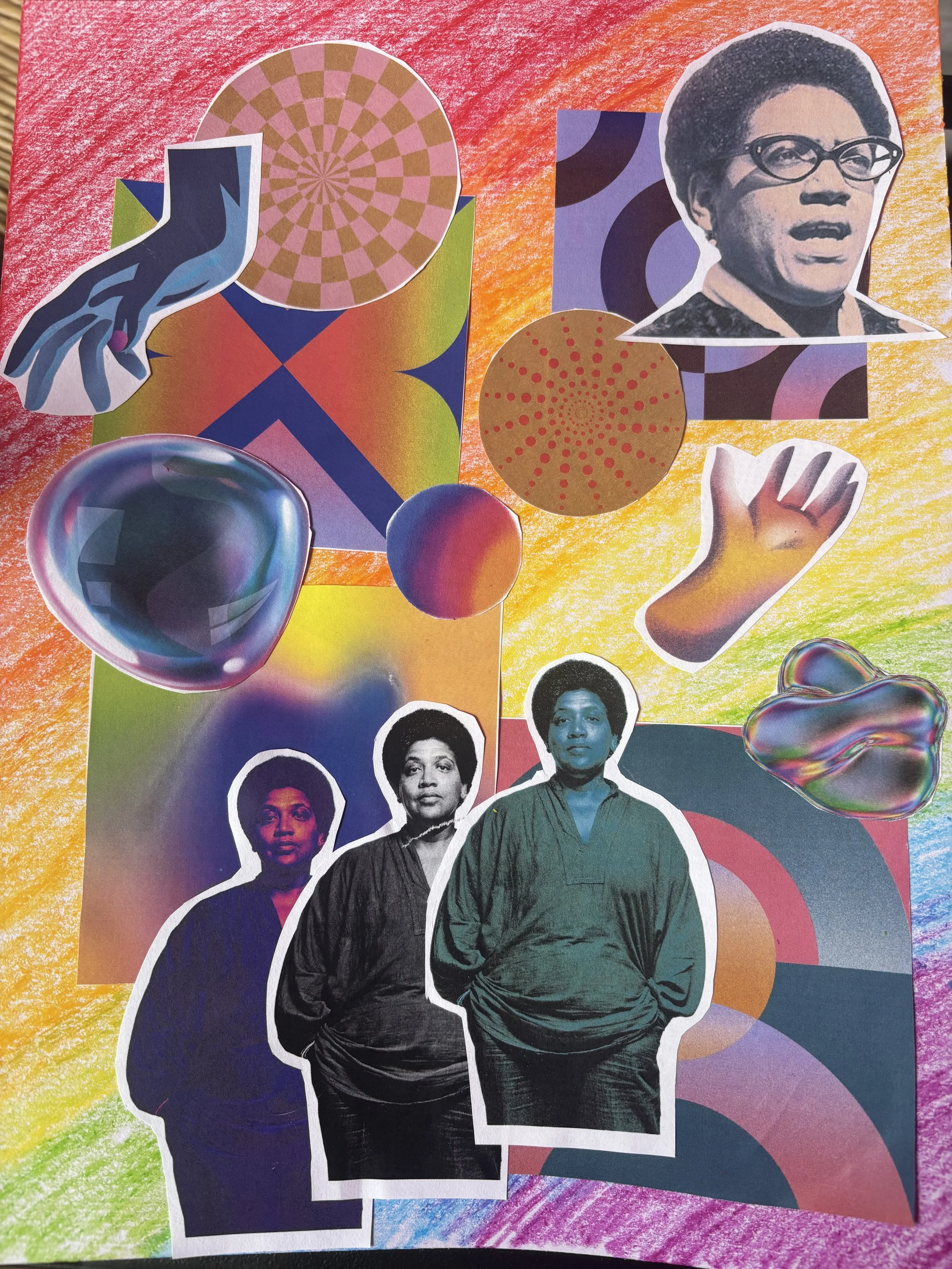
This is for you, if you’re curious about what happens when you allow yourself to make something without worrying about the finished product. This is a space where beginner hands are encouraged to experiment with materials, ideas, and activities, and where curiosity often leads to beautifully unexpected places.
What to expect
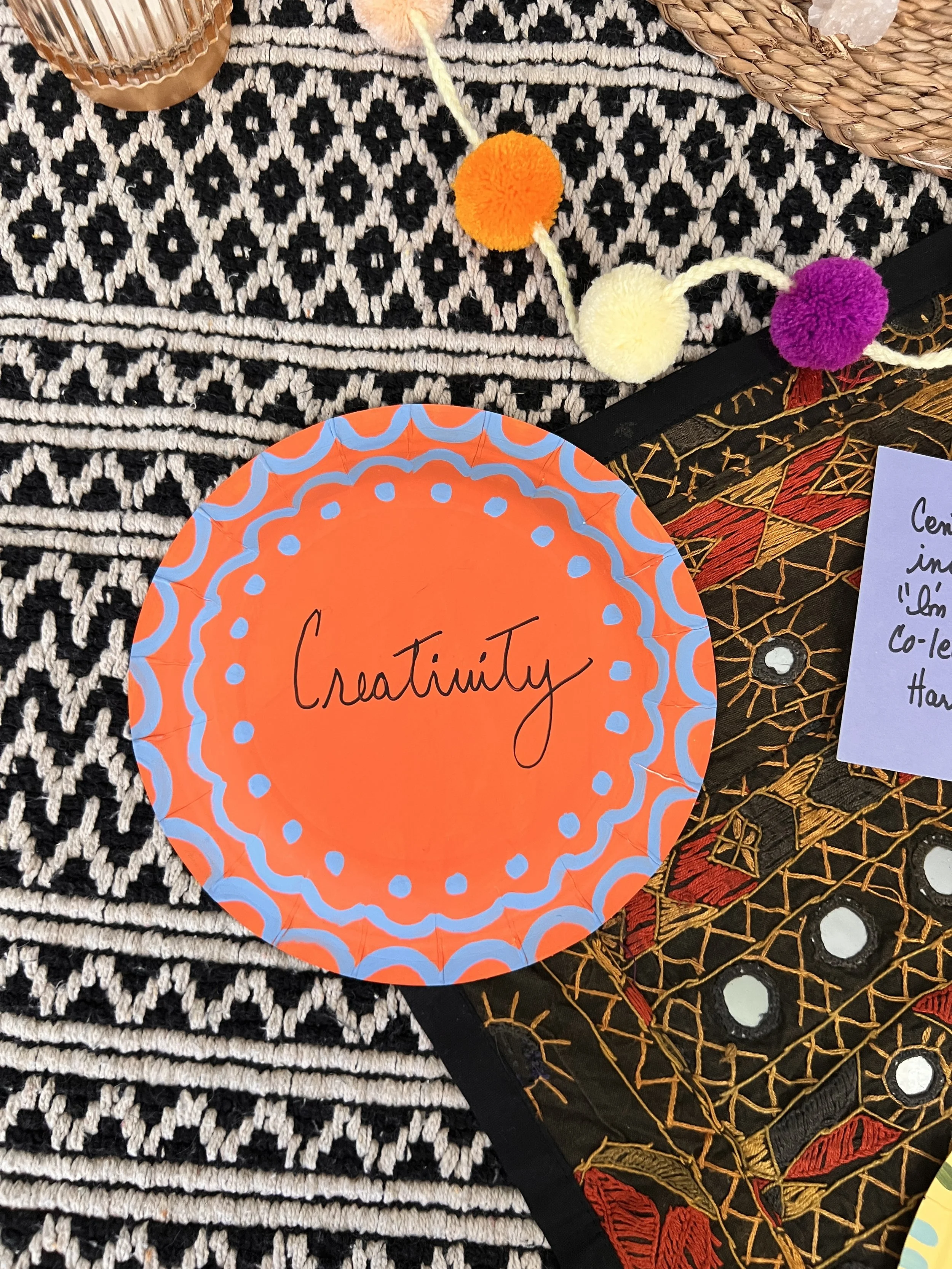
You can expect gentle encouragement and support. A creative practice invites us to tolerate just enough uncertainty to discover what we couldn’t have planned for. This is a practice, not “a perfect.” You’re invited to paint, move, and create on your own and with others, and you’re welcome to share only what you feel comfortable sharing. We co-create a container that can hold many things. Expect laughter, silliness, moments of insight and deep reflection, and sometimes even a few tears. Come as you are, and see what unfolds.
How it’s taught
Most workshops are offered in-person and online. Facilitated live and experientially — you’re guided through each moment rather than lectured at. No prior skill required; you take part at whatever level feels right for you. Each session generally runs for two hours with a facilitator and a small group of participants. For in-person workshops, I provide everything you need. For online workshops, I send you a list of easy-to-gather items. Both formats include a take-home activity page to support your ongoing creative practice.
Confidentiality
The nature of this work is confidential. Organizations and communities bring me in to address real challenges, and I protect that relationship the same way I'd want mine protected. Client names are never disclosed. To protect privacy and confidentiality, I don’t publicly share photos of participants. Images of client work are only shared with consent.
About the teacher
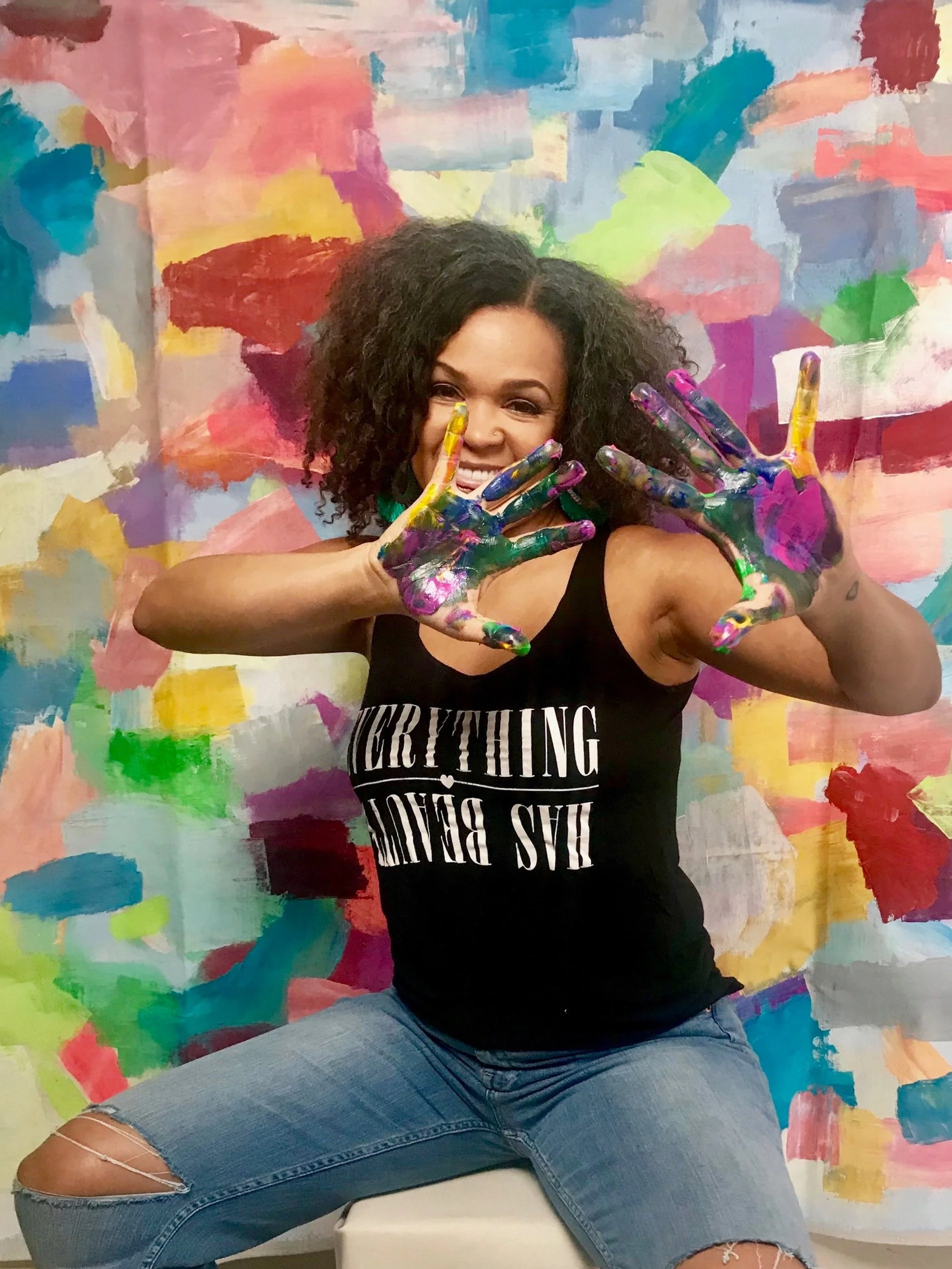
For more than 25 years, I've worked alongside people and organizations to name what's not working and build something better instead. My practice specializes in training and organizational development, with a focus on creative facilitation.
Throughout my professional career, I’ve worn many hats. From freelancer and university lecturer, to working in human resources consulting and workforce development – these experiences have taught me a great deal about how institutions operate, and what people need to do their best work.
My scholarship examines the relationship between people and institutions — how that relationship supports or undermines people's well-being, and what it reveals about who we are. This analysis is more than an academic exercise. It orients my training and consulting work, and how I work with individuals, organizations, and communities, as they build what comes next.
I spent many years as an organizer, which sharpened my sense for how we can create transformational change. I co-edited We Grow the World Together: Parenting Toward Abolition, a collection of essays on parenting and care work as collective practice — work that resonates closely with how I use arts and creative facilitation.
PRACTICE WITH ME
Ways we can create together
Past Workshops
This is a list of some of the workshops that I’ve facilitated. Titles name the anchor medium; every session moves between multiple art forms — expect writing, image, movement, and voice woven together regardless of what's in the name. If you’re looking for something not listed here, email me. I’d love to hear from you.
Conflict and Facilitation
Creative Conflict Resolution
Leadership Development
Interpersonal Skills Training
Facilitation for Liberation
Engaged Learning: Practical Strategies for Facilitators
Life Skills Training
Story and Voice
Story Circles
Writing for Change
In Our Own Words
Words Matter
Poetry IS Public Speaking
Pop-Up Reading Groups
Justice and Advocacy
Policy Analysis for the People
Visioning Abolitionist Futures
Gender Justice for Organizers
Racial Justice for Organizations
Public Comment 101
Information Literacy
Theater and Embodiment
Newspaper Theater
Image Theater
Body Awareness Through Theater
Visual and Craft Arts
Zine Making
Collage Making
Cathartic Release: Painting
Poetry Journal
Expressive Self-Portraits
Stitched Art
Reflection and Growth
Transitions and Transformation
Softening Our Edges
Radical Empathy
Artful Reflections: Personal Ethnography

Good to know
-
This is not art therapy, and I am not a clinician. This is a non-clinical approach that uses different modalities to encourage play, exploration, creativity, and discovery. I value the work of my clinical colleagues and encourage anyone needing or wanting psychotherapy to talk with their doctor. I do not provide referrals and cannot make evaluations for mental health services.
-
There are no rigid rules here, just guidance to help you find a practice that’s genuinely yours. Bring your curiosity, and stay open to wonder.
-
It depends on what you’re hoping to get. My 1:1 sessions are tailored to your individual creative goals and can include exploring art making, marking a life transition, or looking to build a sustained creative practice. This is work that is especially suited to midlife and beyond – when many of us are yearning to express ourselves in new ways.
-
1:1 sessions are tailored to you – to what you want and need out of a creative practice. Thoughtful making is not just an activity you do once, it’s a powerful tool that can feel like a deep sigh at the end of a hard day, or a reset when you’re feeling stuck. There is no one way to do this work and each session will look different.
-
Sometimes difficult emotions arise during creative work. If that happens, we can decide together how to proceed at a pace that feels safe for you. While I can hold space and support your creative process, I am not a mental health professional and cannot provide therapy, diagnosis, or advice.
-
Price should not be a barrier to cultivating a creative practice. For this reason, I hold a few sliding-scale spots in every workshop. If the listed price isn’t accessible for you, reach out and ask. You don’t need to explain or document anything. If you’re in a position to pay full price, you’re helping make one of those spots possible for someone else.